(as written in 2013)
About a week after I escaped the Airplane Plot, Hong started inviting all sorts of specialists to the house: fortune tellers, spirit mediums, people who claimed they could expel ghosts. One guy spent nearly five hours pacing the rooms, lighting candles, incense, his face set in grim concentration. Hong insisted she was seeing ghosts, said even the dogs could sense them. My big dog stayed calm, but my little one was terrified; he stopped going upstairs altogether, just sat at the bottom and shook until someone carried him up. That started the day after Hong mentioned the ghosts. Coincidence? Maybe. But what happened next left me questioning everything.
Hong brought in a tarot reader who gave everyone in the house a reading. When it was my turn, I cut the deck three times and watched as he laid out the cards. He started by telling me I was a good man, surprised by how much I’d do for my family. Then he said I’d be the most important figure in my son’s life. At the time, that felt off; Hong, her sister Tuoi, the nanny Co Hai, and four cousins were all more involved with my son than I was. I spent most days isolated, depressed, locked in my office, numbing myself with drugs.
He told me I was skilled at making money but didn’t care much for it, so I held myself back on purpose. That hit home. I’d always wondered why I lost drive once the money started piling up. Then he said something that made me sit up: out of everyone in the house, I was the only one with a protective spirit, a guy my age who liked it when I went out and “played with the girls and was bad.” That stopped me cold. My good friend Jett, my age, died of leukemia in 2009. He loved to go out and have fun. I’d built a memorial site for him, still live at http://www.forjett.com. If there’s such a thing as ghosts, maybe Jett was watching over me.
The fortune teller went on: two family members I was close to would die before the year’s end. That seemed bold; no one in my family had died in five years. I filed it away as something to watch.
He read for our nanny, Co Hai, and predicted she’d help me the most in the future. Hong didn’t like that; I noticed her discomfort, and Co Hai looked scared, almost guilty. In hindsight, it made sense; they were all in on the scam, and a trusted fortune teller predicting that the “enemy” would help me didn’t sit well. Sure enough, weeks later, Co Hai tried to warn me about danger outside.
But the reading that convinced me most was for Hong’s aunt. He warned her: “Don’t build your house this year, or your husband will die.” Her uncle was healthy, just 41. She built the house anyway. A month after it was finished, he died. Not only that, but my grandmother and her sister passed away that year too; just as predicted. And I left Vietnam with my son, becoming the central figure in his life, exactly as the cards foretold.
Sometimes, the truth is stranger than fiction. I still can’t believe how much of it came true.

Hong sent me the photos above while she was down south for her uncle’s funeral in November 2011. I stayed behind in Mui Ne with our son; eight hours on a bus with a toddler wasn’t something I was willing to put him through. She went alone, handling family obligations while I kept my distance, both physically and emotionally. Even in grief, the distance between us was growing, and these pictures were just another reminder of how much had changed.
Time to Murder Me
Let’s rewind to about a week after I escaped the Airplane Plot when Hong started bringing fortune-tellers and spirit specialists into our home. In Vietnam, psychic predictions carry serious weight. People consult them before any major decision, looking for guidance and, sometimes, an edge. Looking back, it’s clear: they wanted answers. They needed to know how I’d slipped through their trap, and what weaknesses they could exploit next time. The calm didn’t last. The three months that followed were pure hell.
Within two weeks, Hong orchestrated another move. Her friend Giang showed up, pretending to have marital problems. The story was that he needed to vent to Hong, that his wife, who was close with Hong, was driving him crazy. But now I see the truth: his real purpose was to kill me.
To “thank” me for letting him crash at our house, Giang brought me two Japanese swords as a gift. He stood in my office, gripping one of the blades, breathing hard. I didn’t see it then, but he was working himself up, trying to summon the nerve to take my head off. He couldn’t go through with it.
At the time, I was still buying Hong’s story, that her friends from Macau were jealous and plotting against her, too. I didn’t suspect Giang. The saddest part? Right before leaving the room, Hong showed me a rare flash of affection, sat on my lap and kissed me in front of Giang for several minutes. She never did that in front of others. Now I know, it was her way of saying goodbye, expecting I’d be dead within minutes.
The picture below shows the swords Giang brought. He claimed they were a gift, but in reality, they were meant for murder.

That night, after Giang failed to go through with it, he returned with three friends. Hong asked me to join them in the living room, told me not to be rude. Again, she was uncharacteristically affectionate, this time in front of four men, before heading upstairs for twenty minutes. The guys were visibly nervous, arguing among themselves. Two of them got up and left. My 100-pound American Bulldog never left my side, and I’m convinced that’s what kept them from making a move.
When Giang failed a second time, the focus shifted back to framing me. The very next day, my suspicion finally kicked in. I told Hong I didn’t want any more of her friends at the house. She ignored me, bringing her friend Hanh over less than a week later, saying she’d be staying for three days. When I protested, Hong threatened to move out with the baby, so I caved.
The next day, Hong claimed Hanh was clueless about computers, didn’t even know how to create a Yahoo email address, and asked if I’d set one up for her. I should’ve known something was off, but I went along. Hanh vanished upstairs with a laptop for three hours. On a hunch, I checked my media server’s DNS settings and discovered custom configurations rerouting all Skype traffic to the server, meaning someone was capturing audio from my computers, storing it locally in case the internet went down.
I found Hanh’s laptop, its battery had died, so when I plugged it in, all her windows popped back up. She’d been searching for hidden files with the keyword “Trasp.” She also had a free Vietnamese SMS service open and was combing through help files for various programs—hundreds of pages deep.
A Trasp device is a covert spy tool, able to alter the electronic “DNA” of components, reroute internet traffic, deploy malware, and more, all while remaining undetectable. Hanh’s search was no accident.
Then I noticed something even stranger: the help file she was reading wasn’t standard. On page 80, there was a message in English; “I need 20 Soldiers in Tan Binh now.” It was meant to get a reaction from me. Hong had always claimed Hanh didn’t speak English, but nothing about this was adding up. The message was hidden inside an Apple iMovie help file, not part of the original content.
Hong later explained, under pressure, how the Triads taught them to communicate: they’d embed encrypted messages at predetermined spots in help files, with the decryption key hidden in the source code of a specific HTML5 video on a Vietnamese knockoff of YouTube. The first frame of the video would be out of place, signaling which one to check. This method left almost no trace; ingenious, but chilling.
After I kicked Hanh out, the Triads retaliated, sending people to attack Hong’s brother and cousin as a warning. Hong never admitted to anything again. That day, I was too rattled to focus on the technical details; bricks were being hurled at my house, and I was convinced an attack was imminent. I caught Hanh chatting in a room with fifty people; as soon as I started recording the screen, everyone logged out. When I called Hong out, they all logged back in, but stayed silent for several tense minutes. Finally, someone typed in English, “Is anybody from China here?” Another replied, “Why do you need China? Isn’t Vietnam good enough?” They were trying to scare me into fleeing with my 1.5 million Chinese Yuan, hoping I’d panic and make myself more vulnerable. But I was on full lockdown, and they knew it. They were too scared to make a move while I was ready for them.
The interpreter I trusted, Tan, happened to be in Vietnam and came by to help calm me down after I told him what was happening. While he was there, Hong’s phone rang; Giang calling. I told Hong to answer normally and not mention that Tan, my interpreter, was with me. But as soon as she picked up, the first thing she blurted out was, “You’re on speakerphone, and Eddie’s interpreter Tan is listening.” I was furious. I told her I was calling the police. Within five seconds, a brick smashed against the side of the house, right by my office. Tan was stunned. He’d always thought Hong was sweet, seeing her involved in all this left him speechless.
Meanwhile, Hong’s friend Hanh was using Tuoi’s iPad upstairs. Hong claimed Tuoi had come and taken it, but I knew she was lying. I searched the house and found the iPad hidden in my office, propped up under a basket—perfectly positioned to pick up everything I said. There was a program running that allowed for sending and receiving files, and based on what I’d researched, it could not only record audio but also send computer commands via Bluetooth to control my computer remotely. Once I confronted Hong and explained she couldn’t keep lying, she realized she was cornered and finally started to reveal some of their secrets. She showed me how they communicated using encrypted messages, with keys hidden in plain sight on the internet, buried in places only her organization knew to look. But it didn’t take long for her criminal network to send another warning. Hong clammed up again, shutting down completely, refusing to say another word.
Their scam is built on patience. Hong cared for me in ways no one else ever had. That’s by design. They want you to become completely dependent—so when the attack comes, you’re helpless. I couldn’t even feed myself unless it was from a U.S. chain like Pizza Hut. Over time, I let myself rely on her for everything except money. That dependence is a trap, making it harder to leave once things go wrong. If you’re strong enough to try and escape, they’ve already set up ways to cut off your communication to the outside world, making sure that even if you think you’ve called for help, you haven’t. The next move they made to isolate me was even more devious—a level of control and deception that still shocks me.
The screenshot below shows my iPhone’s home screen at a time when I had no idea it had already been compromised. The iPhone Configuration Utility—originally built for corporate IT departments became a weapon in the hands of the Triads. With it, they could install any icon, force apps to open in full-screen, and direct you to any web address they wanted. All it took was a single click on a configuration file; no jailbreak needed. After that, they had full control, able to push silent updates and make changes at will.
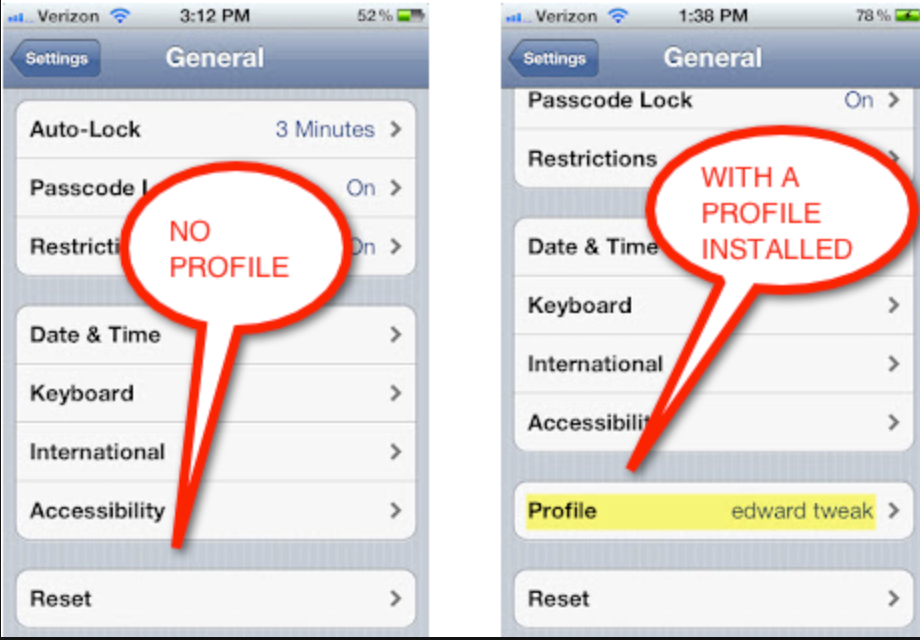

Hong had asked to use my phone a few weeks before the Airplane Plot, saying her battery was dead and she wanted to play a game. She asked for my password. At the time, I thought nothing of it. Now I understand: she needed to click that configuration file, handing the Triads a backdoor to my phone.
One clue was the Skype icon on my iPhone. Unlike other apps, it didn’t have an “X” in the corner (see image above); meaning I couldn’t delete it. It wasn’t the real Skype app; it was a web app disguised as Skype, pointing to an HTML5 site they controlled. They could intercept my calls, record audio, and decide whether to connect me or not. Over time, they built up a library of voicemail recordings from everyone in my contact list. When I tried to call for help, I’d get what sounded like the real voicemail, but my messages went to their server, not the person I was calling.
I realized something was wrong when every call to my mother’s phone went to voicemail, even though it rang six times each attempt. On a hunch, I dialed her number directly from the keypad instead of using her contact. She picked up on the first ring. She hadn’t gotten any calls before that, her phone had been right next to her the whole time. That’s when I knew: they’d set up a perfect trap. My outgoing calls, my emails, even the programs I used, if they didn’t want me to communicate, the apps would crash or my messages would never make it out.
They had me completely isolated, cut off from the outside world. My emails for help never reached anyone. My calls were intercepted. These people rarely lose. I was only able to escape because of a combination of luck, instinct, and what I can only call divine intervention. I’ve always prided myself on thinking eight steps ahead, but these people thought ten, and they were relentless. There were moments when I ran out of moves, when logic failed me, and still, somehow, I found the one path out. Looking back, it’s clear: I didn’t do it alone.